
Algorithms influence the search results you see and the posts that appear in your feed. They use your searches, clicks, and viewing history to predict your interests, then rank content according to those predictions.
As most people never learn how that content sorting happens, the internet can feel random to them. At The Demo Blog, we explain how content sorting follows rules you can learn, even when the results seem random.
This guide covers what an algorithm is, how your feed gets built, and how search engines, streaming, and shopping sites rank differently. It also weighs what an algorithm-driven internet takes in exchange for the convenience.
Let’s get started.
What Is an Algorithm, Really?

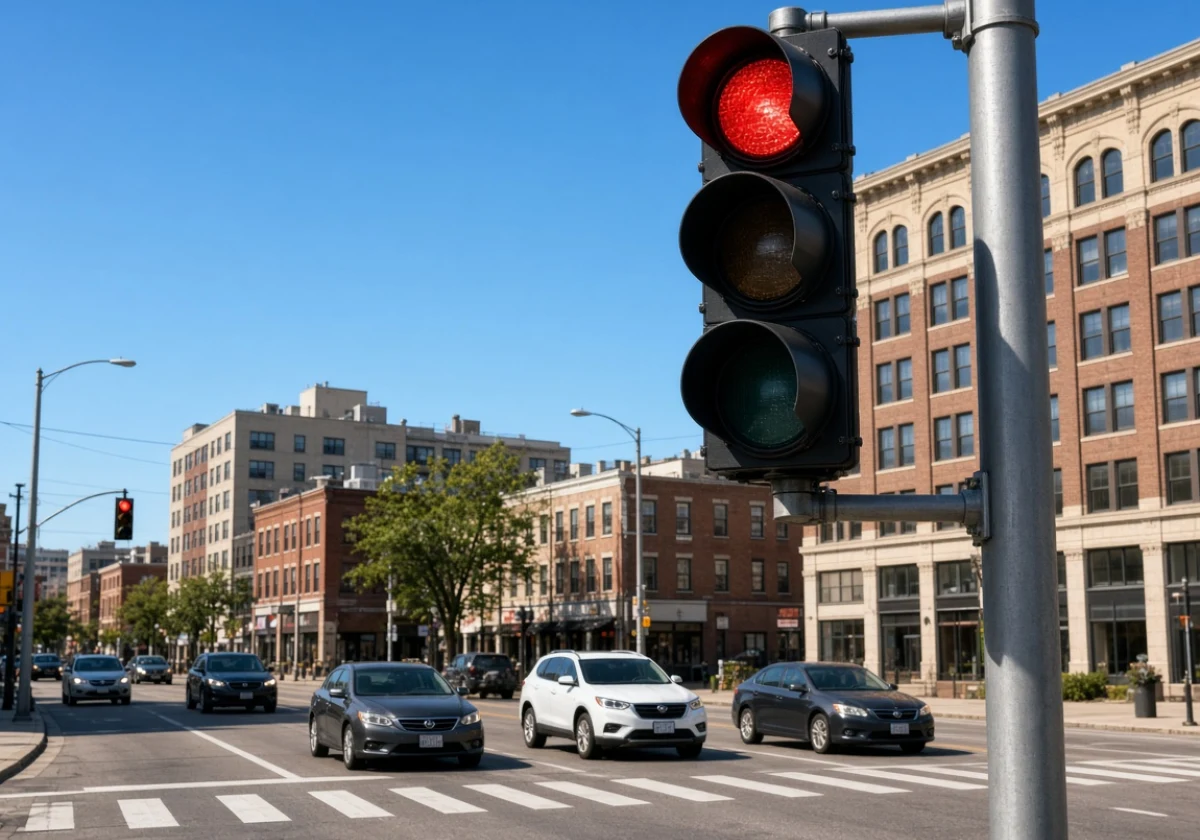
An algorithm is a set of instructions a computer follows, step by step, to solve a problem. Plenty of them work far from a screen too. For example, a traffic light controller follows instructions that determine when each signal changes and how long it stays green.
Three angles make the idea of an algorithm clearer.
1. A Recipe Is the Easiest Way to Picture It
Think about a recipe for a cake. It names ingredients as inputs, lists a series of steps in a specific order, and ends with one output. What makes an algorithm an algorithm is that same structure, just minus the oven.
However, if you’ve ever rushed a bake and added the eggs last, you already know what order does to a result. So a computer program follows its steps exactly, with no improvising along the way (a recipe that guesses its own steps isn’t a recipe).
Each one also finishes in a finite number of steps, which separates it from a vague suggestion. For instance, an algorithm finding the largest number in a list checks each entry and stops after comparing the final one.
2. From Computer Science Class to the Phone in Your Pocket
Mathematical algorithms came first, centuries before any screen existed. That mathematical history also explains the name: “algorithm” derives from the Latinised name of Persian mathematician al-Khwarizmi.
Computer programming later gave developers a way to express step-by-step mathematical procedures in code, using languages like Python or JavaScript. That program only does what its instructions say, which is both its strength and limit.
Most people assume algorithms live only in a computer science classroom. But each time you scroll, your feed uses signals such as previous likes and viewing time to select the next posts. You can recognise similar selection processes in music recommendations, shopping suggestions, and search results.
3. Sorting, Searching, and the Complex Algorithms You Rely On
Different problems call for different algorithm families, and each one breaks the work into steps. Each family handles a different task, like ordering a list, finding an item, reusing calculations, or mapping connections:
- Sorting: A sorting algorithm puts items in order, though the method decides how quickly that happens. Bubble sort compares one pair at a time, Merge Sort splits the list and stitches it back together, and Heap Sort pulls the largest value out first. Among those three sorting techniques, Merge Sort belongs to the divide-and-conquer algorithms, which cut a large job into smaller ones.
- Dynamic Programming: These algorithms work the other way, saving answers they already found so no step repeats. Dynamic programming can use recursion too, but it also supports iterative approaches.
- Searching: Searching runs on a different kind of logic. Brute-force algorithms like linear Search check every entry until they hit a match, while a Binary Search Tree drops half the remaining options at each step.
- Graph: Graph algorithms map connections, like the route a delivery driver takes across town. A Minimum Spanning Tree is the cheapest set of links that still reaches every stop, which is why network planners start there.
Programmers weigh all these algorithms with Big O (O) notation, a shorthand for how the work grows as the pile gets larger. For example, sorting a music library takes additional work as you add songs. Big O describes how that workload grows with the collection.
Machine Learning Algorithms Decide What You See on Social Media
Generally, your feed and your friend’s feed look nothing alike, and social media algorithms are the reason. Both of you opened the same app, but the ranking system built two separate versions of it. This difference comes from a machine learning algorithm called a “recommendation algorithm”.
When you sign up for a new app, the algorithm knows almost nothing about you, so it guesses from broad patterns. Initially, artificial Intelligence makes those early calls by copying people whose sign-up details look like yours.
Every pause, tap, share, and rewatch after that becomes data the system learns from. This way, machine learning makes your history into predictions about which posts hold your attention longest. Later, teams of data scientists tune those predictions. As a result, the more data you hand over, the sharper the guesses get.
At the beginning, Facebook made the approach famous with its News Feed, and nearly every platform copied the pattern. Your feed displays posts according to the scores the platform assigns each one.
If you’ve ever looked up hiking boots once and watched trail videos follow you for a week, you’ve seen that loop close. Fortunately, you’re not stuck inside the process, though. Following fewer accounts, clearing watch history, and muting topics all change the inputs (the model only knows what you feed it).

Comparing Digital Platforms: Search Engines, Streaming, and Shopping
Once you see what each platform’s algorithm rewards, your search results and recommendations start making sense. Search engines rank pages for your query, streaming services suggest titles you may watch, and shopping sites recommend products you may buy.
The table below lines up three services you probably used today.
| Platform | What it reads | What it rewards |
|---|---|---|
| Google Search | Keywords, links, page quality signals | Pages that answer the query fastest |
| Netflix | Watch history, finish rates, ratings | Titles that keep your subscription active |
| Amazon | Purchases, carts, searches, reviews | Products likely to sell and ship quickly |
Google PageRank set the early pattern by treating a link as a vote, and link quality still feeds what search engines show you. Netflix focuses on keeping subscribers interested. In 2015, its engineers reported that recommendations influenced roughly 80% of hours streamed.
In plain terms, your past behavior sets the baseline, and the company’s goal bends the ranking from there. We sometimes compare the same search across two accounts and see different results. Those variations show that your results may reflect personalisation alongside relevance.
Technology Impact: What an Algorithm-Driven Internet Gives and Takes
Across all of the social platforms, the age of algorithms comes with one standing trade. Machine learning saves you time while it silently steers your choices and your data, usually with no announcement.
Consider how algorithmic ranking saves search time, can repeat bias, and uses your personal data:
- Speed Over Searching: Ranking shrinks an impossible pile into a first page of 10 usable links. Without it, you’d meet the web in publishing order, and nobody has time for that. For example, a plain keyword match would bury the one article that answers your question.
- Bias Built Into Code: As people write the set of rules, their blind spots travel straight into the output. Train a system on skewed data, and it repeats that skew at scale, often where nobody can see the cause. That said, Code can repeat biases in its training data and apply them across millions of decisions.
- Data As the Real Price: Behind every free service sits a privacy policy and terms of use spelling out what gets collected. Those documents sit in the footer beside the rights reserved line, and almost nobody opens them. Reading the collection section once tells you which habits you’re trading away, and which settings are worth changing.
Quick Tip: Open your ad settings every few months and read what the platform thinks you want. That list explains the algorithm better than any policy page does.
Start Noticing the Algorithms Behind Your Online Experiences
Algorithms aren’t mysterious once you know they’re instructions running in a fixed order. Each ranked list you meet online started as rules someone wrote, and a machine applied them to whatever it knew about you.
Start watching for them this week, in your feed, search results, and cart. When a recommendation feels a little too accurate, ask what data taught it that.
Ready to read the internet with sharper eyes? Follow The Demo Blog for plain explanations that make everyday technology easier to understand.