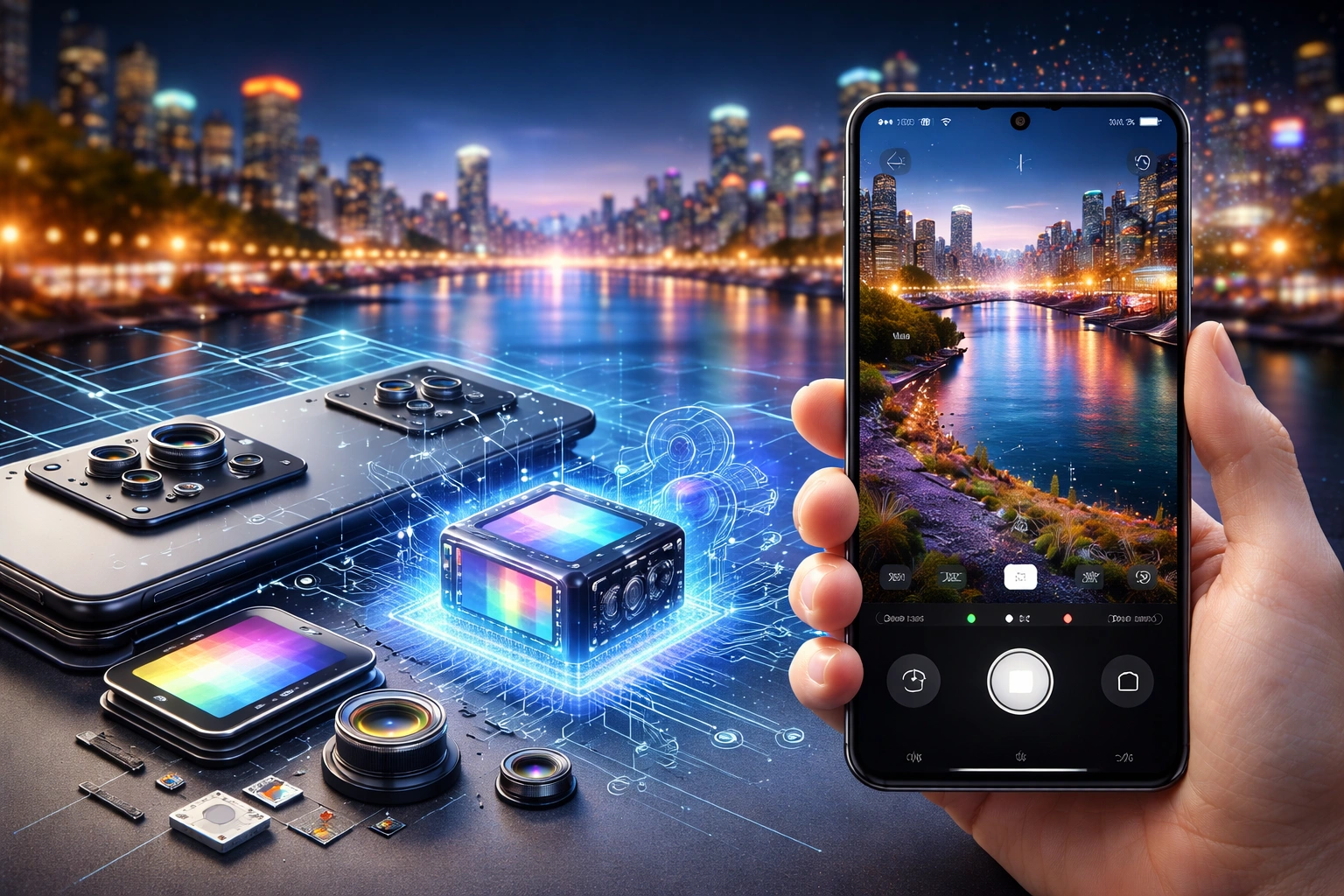
Nowadays, smartphone camera technology is changing photography as computational power handles what traditional glass and physics couldn’t solve. No wonder smartphones now account for 91% of all photos taken globally, with dedicated cameras capturing just 7%.
Our phones can capture multiple frames every second and analyze lighting conditions in real time. Because of that, photos from modern smartphones look sharper than what older point-and-shoot cameras could manage.
In this article, we’ll explain how different sensor formats affect your photos. You’ll also find out why variable aperture technology adapts to any lighting situation, and the way periscope zoom produces optical reach without adding bulk.
Let’s learn about the hardware and software working behind every shot you take.
What Makes Smartphone Camera Technology Different from Traditional Cameras?
Smartphone cameras process dozens of images per second while traditional cameras capture single frames. And here’s the wild part: your phone analyzes the scene before you even press the shutter button.
Here’s how the camera in your pocket essentially cheats physics to function properly.
Sensor Size Is Still Relevant, Just in New Ways
Smaller sensors keep your phone slim while software compensates for reduced light capture. This software processing tweaks exposure, sharpness, and color here and there across different parts of the photo.
Usually, a DSLR captures what its optics allow in one moment. But your smartphone captures multiple exposures, identifies faces and objects in the scene, then merges everything into a photo that looks better than what the tiny lens could physically produce.
Computational Photography Fills the Gaps
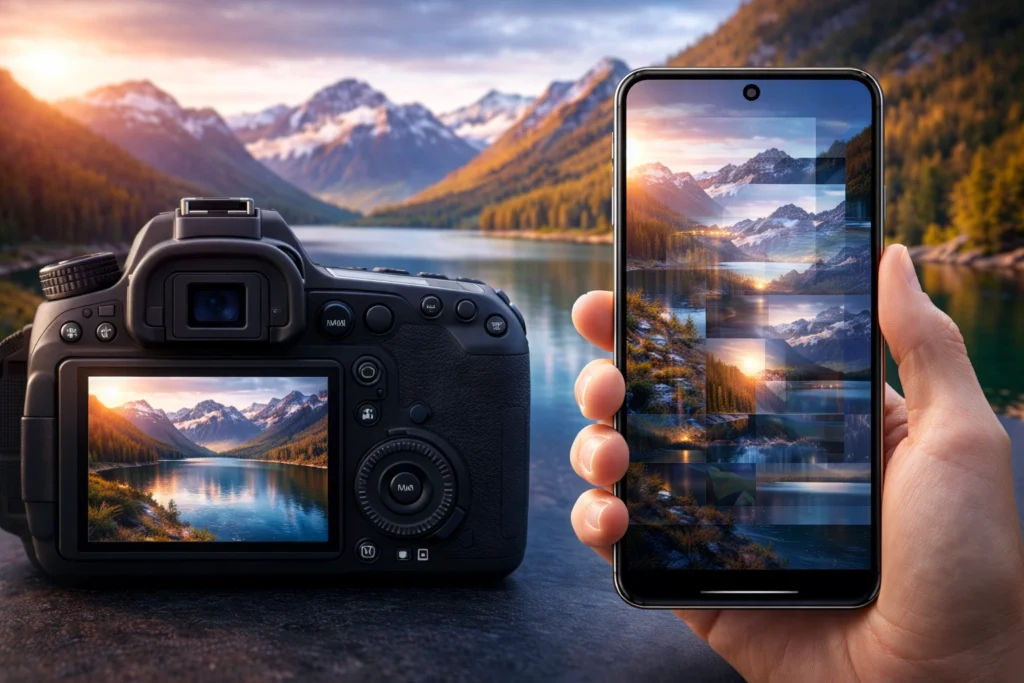
Phone manufacturers chose portability over sensor size, then built AI processing to close the image quality gap that would otherwise exist. That means the depth of field stays wider, and it keeps more of your scene sharp instead of creating that blurry background effect professional photographers chase.
Google Pixel phones pioneered this approach. Its AI detects faces, lighting conditions, and motion to apply adjustments automatically before you see the photo. The final image you get combines information from frames captured in milliseconds.
For this reason, worldwide camera shipments dropped 94% earlier between2010 and 2023. The numbers fell from 109 million units to just 1.7 million as computational photography became the standard.
How Sensor Formats Influence Mobile Photography Quality
Sensor formats control how much visual information your camera captures in each shot, which directly affects your image quality. For instance, full-frame sensors offer better dynamic range but require bulky gear, while smartphones rely on small sensors and computational processing to achieve similar results.
This is what you need to know about different sensor formats.
Why Full Frame Dreams Don’t Fit in Your Pocket
Full-frame sensors are 30 times larger than typical smartphone sensors by surface area. These sensors measure 36mm x 24mm and require lens assemblies too large for phones to accommodate. The physical depth needed for full-frame optics would make your device thicker than most people want to carry.
On the other hand, smartphones use sensors around 1/1.3-inch, roughly 13mm diagonal, to maintain slim profiles that users expect (yeah, we’ve all dreamed about that impossible camera-phone hybrid at some point).
Full-frame cameras also cost more because the larger sensors and lenses demand precision manufacturing at a much bigger scale. That’s why iPhones can be expensive, because Apple doubled the sensor size between the iPhone 12 Pro Max and iPhone 15 Pro Max.
Medium Format vs. Smartphone: The Image Circle Reality
Your phone can’t match medium format bokeh naturally because medium format cameras capture significantly larger image circles. This produces exceptional detail and color depth that smaller sensors physically can’t achieve. The sensor might measure 44mm x 33mm, which gives photographers far more control over focus and background blur.
Conversely, smartphones work with tiny image circles that limit optical zoom capabilities and restrict how shallow the depth of field can get. Computational photography might bridge this gap by simulating bokeh and enhancing sharpness through algorithms, but the artificial effect doesn’t always match what genuine optics produce.
Low Light Photography Gets Better with Hardware and AI
Low-light photography used to mean grainy, blurry photos that nobody wanted to share. But the good news is that the latest smartphones stack advanced sensor technology with AI processing. What does this mean for your photos? You get clean images in dim restaurants, at concerts, or during evening walks without carrying a tripod or professional lighting setup.
Here’s how the technology handles challenging light conditions:
- LOFIC Sensors (Lateral Overflow Integration Capacitor): These sensors stack photodiodes vertically. It allows them to capture significantly more light information in both bright highlights and dark shadows within a single frame.
- Night Mode Processing: Your phone captures several shots over 2-3 seconds at different exposure levels, then the system merges the sharpest details from each frame while eliminating noise. This multi-frame approach produces clarity that single exposures simply can’t match in low light conditions.
- AI-RAW Burst Handling: The computational system processes multiple RAW images in milliseconds. All while optimizing focus accuracy, color balance, and exposure settings across the entire burst before delivering your final photo.
- Selective Brightness Adjustment: Different parts of your photo receive separate exposure treatments automatically. Say, faces stay properly lit while backgrounds don’t blow out. This solves the problem of mixed lighting that ruins most amateur photography attempts.
- Noise Reduction Without Blur: The algorithm aligns multiple frames with extreme precision to compensate for hand shake. If you don’t stabilize the frames correctly first, the stacking process creates ghosting instead of sharpness.
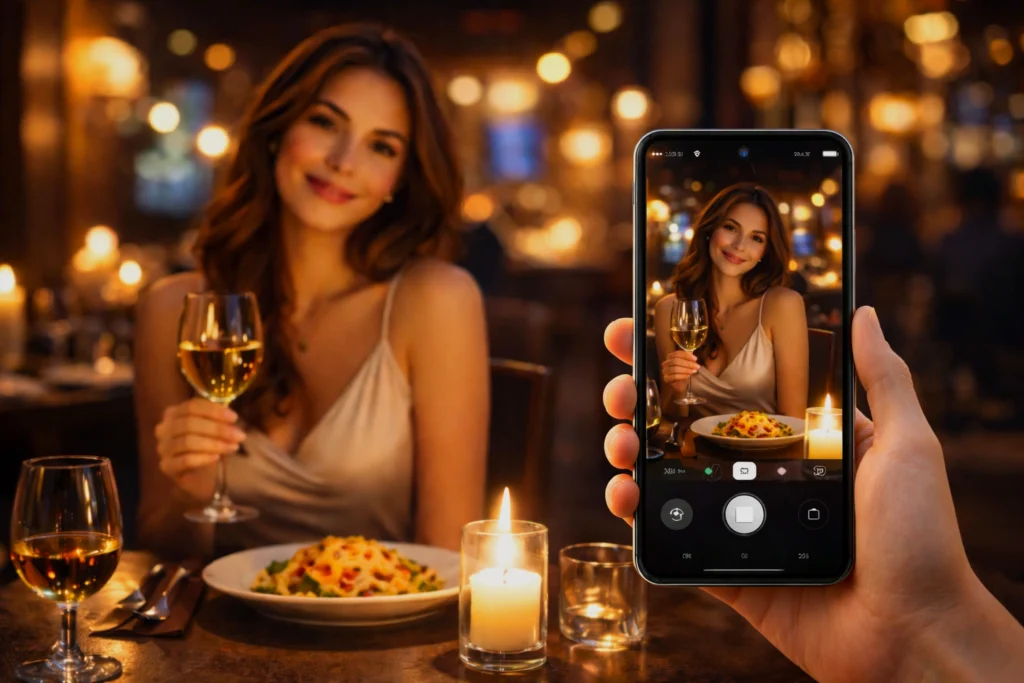
Along with all these, the aperture switches between f/1.4 for low-light situations and f/4.0 for macro shots automatically based on what the scene needs. This mechanical adjustment occurs in real time as lighting conditions change.
Periscope Zoom Brings DSLR Reach to Your Pocket
Periscope lenses use folded optics to achieve 10x optical zoom without bulky camera bumps that would ruin the phone’s sleek profile.
Basically, ALoP prisms (a periscope telephoto camera technology) compress telephoto modules small enough to fit inside foldable smartphones while maintaining optical quality. This is how the steps go:
- At first, the light enters through the phone’s back
- It hits a prism that bends it 90 degrees
- Then it travels horizontally through a series of lens elements
- Finally, the light reaching the sensor
To give you an idea, phones like Vivo X300 Pro provide telephoto clarity that rivals traditional DSLR lenses. It allows you to capture distant subjects without the digital quality loss that comes from cropping.
The Mobile Photography Trends in 2026
Now that phones handle stills like pros, video is getting the same treatment. Mobile photography trends in 2026 focus heavily on professional video capabilities and flexible post-production workflows that were exclusive to cinema cameras until recently.
Here’s what’s changing in mobile photography right now.
Pro Video Formats Take Over the Default Settings
Based on our firsthand experience with recent flagship phones, Apple Log 2 and ProRes RAW give emerging content creators and mobile filmmakers cinema-quality footage straight from their iPhones without external recorders.
Apple Log 2 captures flat color profiles designed for professional color grading software. This gives editors maximum flexibility when matching shots from different cameras or lighting setups. The footage usually looks washed out straight from the camera because it preserves all the color and brightness information for manipulation later.
Similarly, ProRes and ProRes RAW recording can match footage across different cameras and lighting setups. It’s especially useful when you’re mixing iPhone shots with professional gear.
External Storage Becomes Part of the Workflow
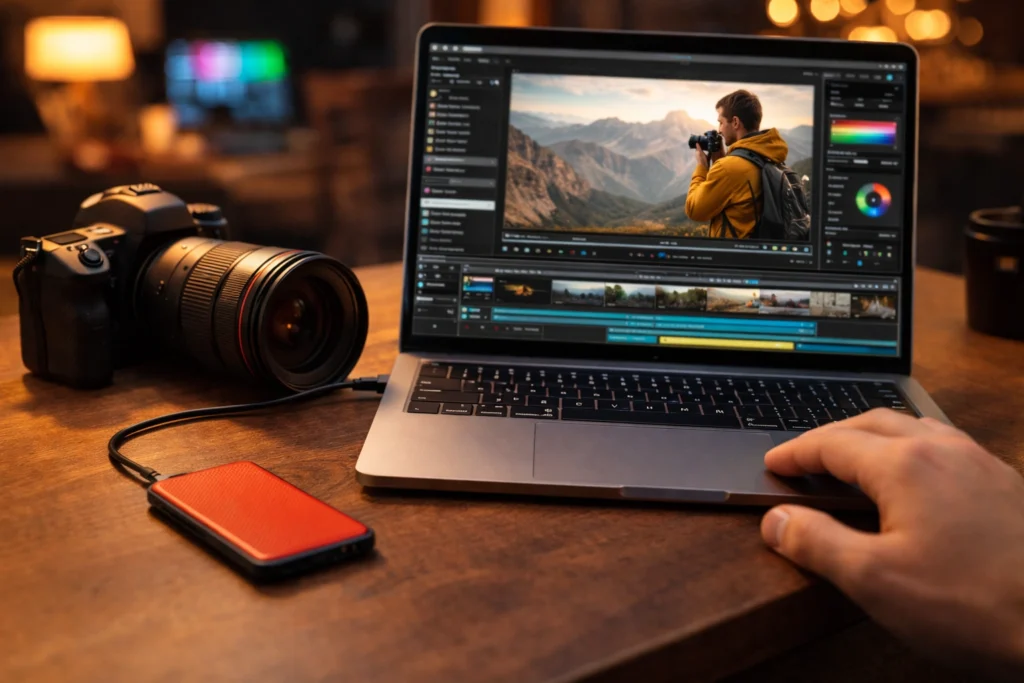
External storage lets you shoot 4K ProRes without worrying about filling your phone in minutes. High-quality video files often eat storage fast, and push creators toward external SSD workflows.
In fact, a single minute of ProRes video can consume over 6GB of space, which would fill a 256GB phone after roughly 40 minutes of recording (trust me, running out of storage mid-shoot is the worst experience you’ll have on set).
Which is why offloading footage directly to external drives keeps phone storage free and files organized properly from the start. The camera roll simply can’t handle the data rates that professional video features now produce. So, external recording moved from a convenience feature to an absolute necessity.
Your Phone Shoots Like a Studio Now
Smartphone camera technology has evolved way beyond simple point-and-shoot convenience into professional-grade imaging systems. Technologies like variable apertures, periscope zoom, and multi-frame processing handle scenes that once demanded specialized equipment and years of technical knowledge.
Your next photo might come from your pocket, but the technology behind it rivals what professionals carried in camera bags just five years ago. You can easily start experimenting with night mode, variable aperture settings, and pro video formats because your phone already has the tools waiting for you to use them.
If you’re looking for more emerging technology and want to stay informed about innovations reshaping creative work, The Demo Blog covers the latest developments you need to know about before they hit mainstream adoption.